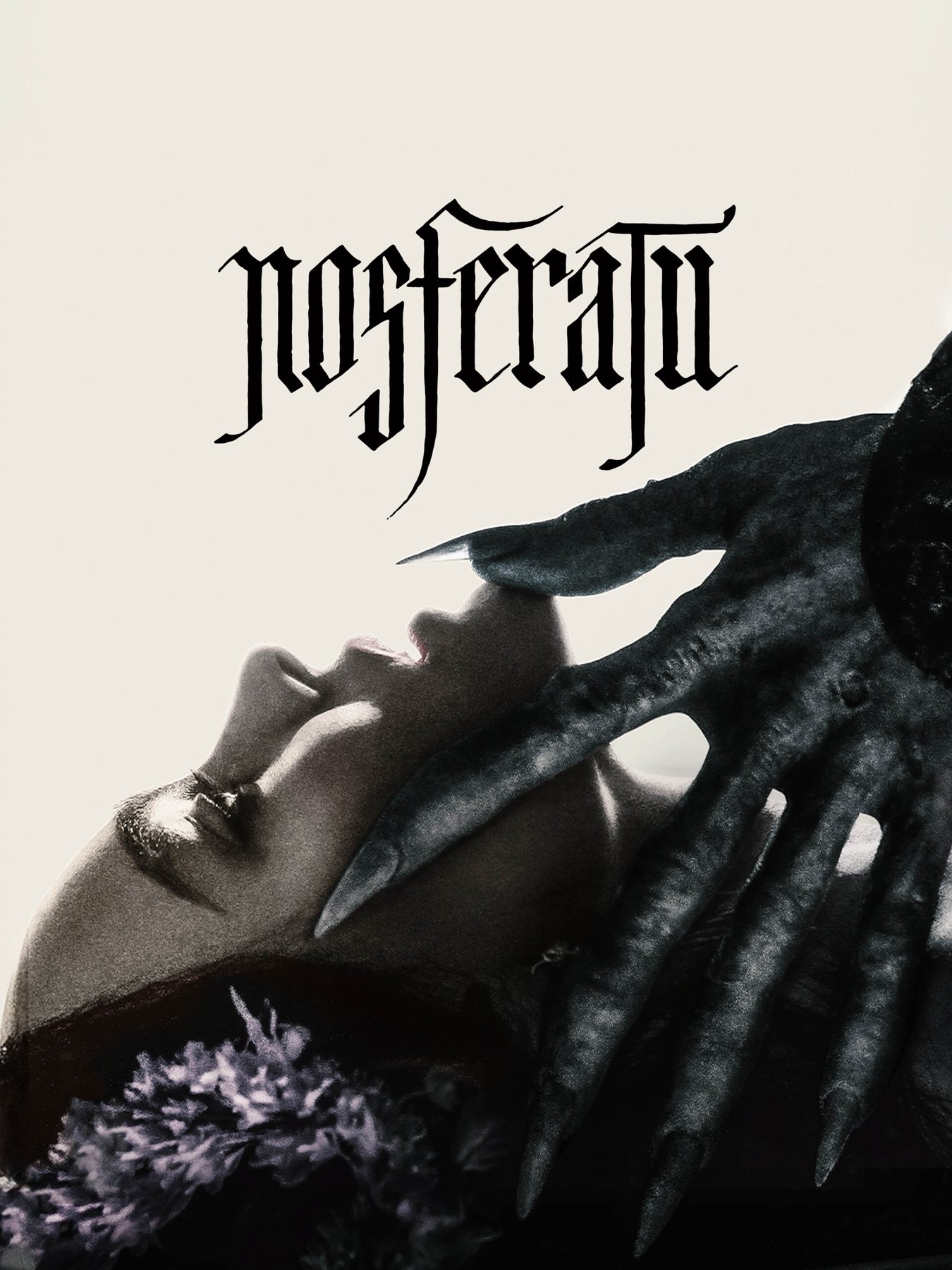
Nosferatu
Notes
How can a never-ending nightmare be so achingly beautiful? How can a grim vision terrify the mind while quietly, hypnotically fulfilling the eye? For this October, as our zine explores the theme of Decay, there is no work more fitting to recommend than Robert Eggers’ Nosferatu. It is a cinematic masterpiece that examines how rot—of the body, the mind, and the very fabric of reality—can be staged with uncanny elegance. From the opening frames, we find Ellen (Lily-Rose Depp) suspended in a liminal space between dream and waking life. Every crafted detail, from the 19th-century garments to the starkly balanced moonlight, seduces the gaze while evoking a profound, creeping unease. The descent begins as her husband Thomas (Nicholas Hoult) travels to Transylvania to meet Count Orlok (Bill Skarsgård). His doomed journey through sunless, snow-blanketed landscapes pulls us into a folkloric haze—a place half-dreamt, half-feared. Orlok’s jagged, spectral castle rising against moonlit hills traps both Thomas and the audience in a beautifully inescapable nightmare. But the true decay takes root when the narrative shifts back to Ellen. As Orlok’s shadow stretches across her soul, her physical and mental deterioration blurs the line between illness and demonic possession. Willem Dafoe’s introduction as an occult-dabbling physician only thickens the ambiguity of a fragile world surrendering to superstition. As Orlok’s hunger spreads into the town, Eggers leans heavily into the visceral imagery of decay. Pestilence becomes the cloak of his feeding; rats spill into cobblestone streets, and coffins pile high in a macabre landscape. The climax offers no triumphant victory, but rather a tragic surrender—a dance of attraction and annihilation between Ellen and the Count. When the sun finally breaks, what remains is a world hollowed by death, where survival itself feels like a curse. Eggers has crafted a masterclass in atmosphere, where the logic of sleep drags us into the same psychological fog consuming the characters. The film’s philosophical core lingers like an incantation, perfectly capturing the essence of our monthly theme. We are left wrestling with Orlok's chilling declaration, "I am an appetite, nothing more," and Ellen’s desperate plea: “Does evil come from within us, or from beyond?” In this breathtakingly grim realm, decay is not merely the rotting of flesh. It is the inescapable fate of the human soul.